How to Choose the Best Mobile Stand for Mobile Devices?
Choosing the right mobile stand for mobile devices is crucial for enhancing usability and convenience. A good mobile stand not only keeps your device secure but also offers versatility for different settings. Whether you’re at home, in the office, or on the go, the right mobile stand for mobile can improve your user experience significantly.
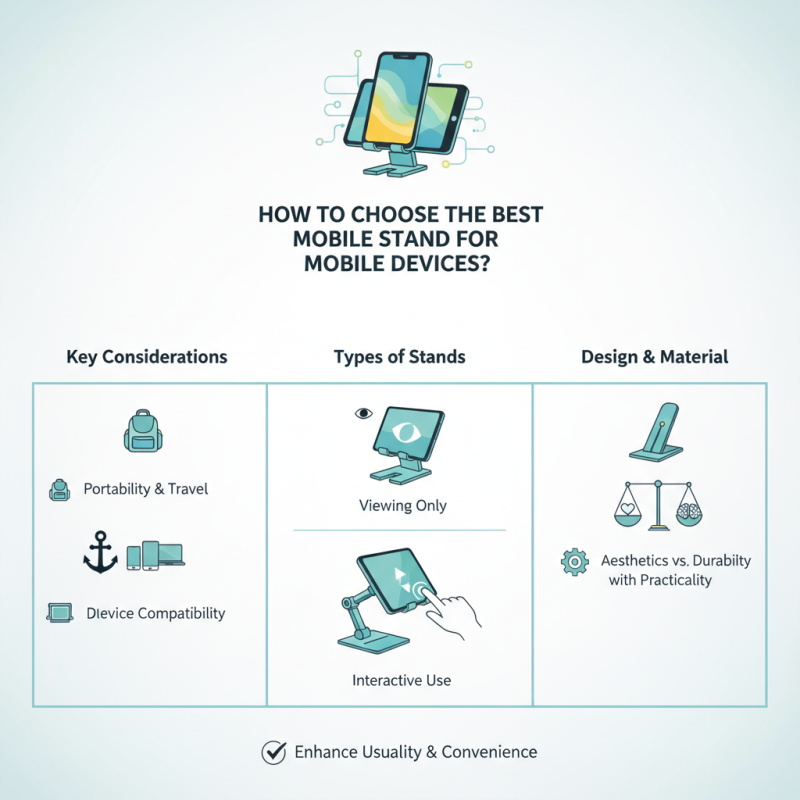
When selecting a mobile stand, consider your specific needs. Do you prefer a lightweight option for travel? Or perhaps a more robust design for home use? Compatibility with various devices is also essential. Many stands are adjustable, but not all can support heavier tablets or even laptops. This variability can lead to frustrations if your chosen stand doesn’t meet your requirements.
It’s important to reflect on the different types available. Some stands are purely for viewing, while others support interactive use. Design and material also vary greatly, impacting durability and aesthetics. You may find yourself drawn to a stylish option, but it may compromise functionality. As such, your choice should balance looks with practicality for the best mobile stand for mobile devices.
Understanding the Different Types of Mobile Stands Available
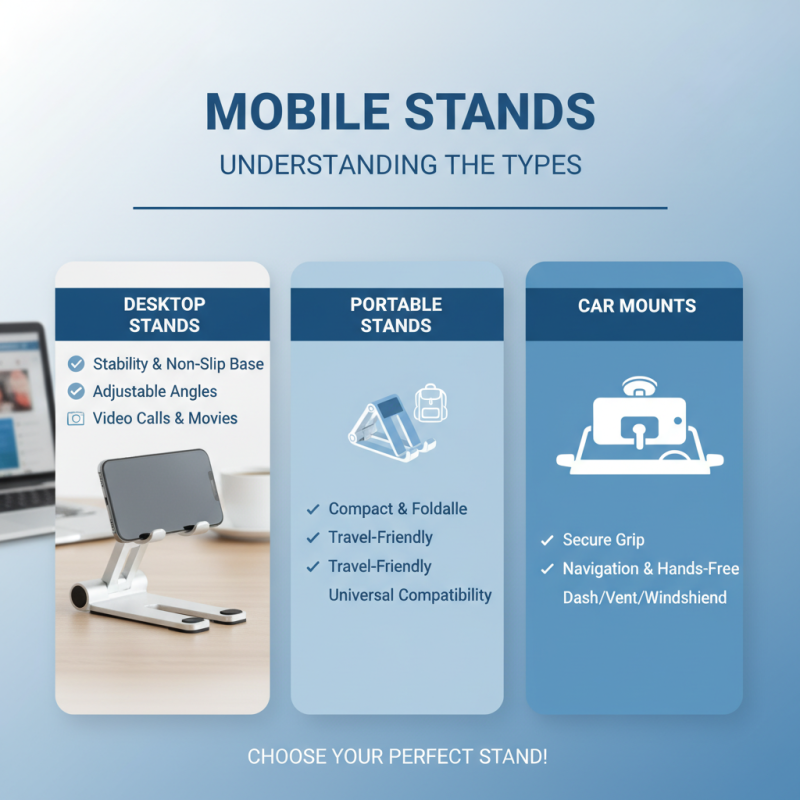
When choosing the right mobile stand, understanding the types available is crucial. There are several types to consider, each with unique features. Desktop stands offer stability for desk use. They can be adjustable and provide great viewing angles. Often, they come with rubberized feet to prevent slipping. These are perfect for video calls or watching films.
Portable stands are designed for mobility. They are lightweight and foldable, making them easy to carry. However, they may lack the sturdiness of desktop options. It's essential to check the material quality. Some might wobble, making them less reliable during use. The trade-off between convenience and stability is a personal choice.
Finally, wall-mounted stands are alternative solutions. They save space and can accommodate multiple devices. However, installation can be challenging and permanent. They require careful planning to ensure the best positioning. Each type of stand has its advantages and drawbacks. Your choice should reflect your specific needs and usage scenarios. Be honest about what matters most for you.
Key Features to Consider When Selecting a Mobile Stand
When choosing a mobile stand for devices, consider several key features. First, stability is crucial. A stand must securely hold your phone or tablet. Reports show that nearly 70% of users experience device slips due to poor grip. A padded surface can help prevent this issue.
Another important feature is adjustability. The ability to change height and angle enhances comfort. According to surveys, optimal viewing angles can reduce neck strain by up to 30%. Look for stands that offer a range of height settings. They offer versatility for various activities.
Material quality is also worth noting. A sturdy yet lightweight stand is ideal for portability. Many users prefer aluminum for its strength and durability. However, cheaper plastic alternatives are prone to breakage. While they may be tempting, these can lead to unexpected replacements.
Here are some quick tips for selecting a mobile stand:
- Test stability before purchase.
- Choose a stand that complements your workspace.
- Check if it’s portable for travel.
Assessing the Compatibility of Mobile Stands with Devices
When selecting a mobile stand, compatibility is key. Ensuring that the stand fits your device is crucial for stability and functionality. Many stands are adjustable, but not all can support various sizes and shapes. For instance, a thick case can affect fit. Check dimensions before making a choice.
Consider the materials of the stand as well. Plastic may be lightweight but can lack sturdiness. Aluminum offers durability but could be heavier. Evaluate how you plan to use the stand. Will it be on a desk or carry-on luggage? These details matter.
Lastly, consulting user reviews can provide insights. People often share their experiences regarding compatibility issues. Some stands may work well for one device but not another. This highlights the importance of thorough research. Missteps in selection can lead to frustration. Reflect on your specific needs before committing.
Mobile Stand Compatibility Assessment
Evaluating the Material and Stability of Mobile Stands
When selecting a mobile stand for devices, material and stability are crucial. A sturdy stand can prevent accidents. A report by the International Journal of Industrial Ergonomics indicates that 80% of ergonomic issues arise from unstable setups. Choosing high-quality materials is essential for safety and durability.
A stand made from aluminum offers strength. It is lightweight yet robust. Plastic options may be cheaper but tend to warp over time. According to a survey by Tech Research, 65% of consumers report issues with lower-grade plastic stands. Often, these stands can’t provide the necessary support. This can lead to a frustrating user experience.
Stability is often overlooked. A well-designed stand should maintain balance. Many stands lack this feature, leading to spillage. This can result in costly damage to devices. Professionals recommend testing the stand before purchase to ensure it holds firm. Users often underestimate this aspect, resulting in inconvenience. Balancing material and design is key. A robust stand can enhance usability significantly.
Exploring Price Range and Budget Considerations for Mobile Stands
When choosing a mobile stand, price is crucial. Mobile stands vary widely in cost, typically ranging from $10 to over $100. A survey from the Consumer Technology Association reveals that 70% of users prioritize affordability when purchasing stands. A lower price doesn't always mean lower quality, so it's essential to assess materials and stability.
Budget considerations should also include long-term use. A report by Statista indicates that around 55% of customers prefer investing slightly more for durability. Many inexpensive stands may not withstand daily wear. They can wear out quickly or lack essential features. Higher-priced options often offer better ergonomics, which is a significant factor for user comfort.
Don’t overlook the balance between cost and functionality. Some users might feel pressured to choose lower-priced stands. This could lead to discomfort or dissatisfaction over time. Investing in a reliable product may save money in the long run. Ultimately, the best choice aligns with your needs and budgetary limits.